
Booking a corporate event feels straightforward until you actually start doing it. Suddenly there is a headcount debate, a catering question, an AV list, a parking issue, and a leadership team asking when the invites go out.
If you are planning a company meeting, offsite, training, mixer, or ceremony in Wine Country, choosing the right corporate event venue in Sonoma County shapes almost every decision that follows. Room size sets the guest list. Kitchen access sets the food plan. Stage and AV set the agenda. Parking sets the arrival experience.
This guide walks through what corporate events should include, how to plan them, and what to look for in a venue so you can book with confidence.
Key Takeaways
- Corporate events fall into 5 main categories: conferences and all-hands meetings, offsites and retreats, client and networking mixers, training sessions, and award ceremonies or holiday parties.
- The venue is the single biggest planning decision. It affects capacity, catering, AV, layout, timing, and cost.
- Sonoma County adds real advantages for corporate hosts: central Northern California location, Wine Country appeal for out-of-town guests, and a strong local vendor network.
- The most useful venues have flexible indoor and outdoor space, a commercial kitchen or open catering policy, on-site parking, and included tables, chairs, and AV.
- Booking 3 to 9 months out is standard. Peak dates (spring, fall, December) fill first.
- Ask specific questions about capacity, corkage, kitchen use, and what is included before you sign.
Corporate Events by Category and Scale
The term “Corporate Event” covers a wide range. Some are 12 people around a conference table. Some are 700 in theater seating. The planning changes at every scale, but most events fit into a few common categories:
- Internal meetings: Board meetings, all-hands, leadership offsites, department planning. Attendee count usually 10 to 200.
- Training and workshops: Sales kickoffs, safety trainings, certification courses, professional development. Usually 20 to 150 people, often with breakout needs.
- Client and community events: Networking mixers, product launches, open houses, appreciation dinners. Often 50 to 500 people.
- Ceremonies and celebrations: Awards nights, retirement parties, holiday parties, milestone anniversaries. Usually 75 to 400 people.
- Conferences: Industry gatherings, member conferences, symposia. Often 100 to 700 people with programming across a full day.
Each one has different needs for space, audio, food, and flow. Getting the venue right early makes the rest of the planning easier.
The Venue Shapes Every Planning Decision
The venue sets the ceiling on almost every other decision.
- Capacity caps the guest list
- AV limits the agenda
- The kitchen dictates the catering plan
- The layout controls how people move and mingle
- Parking shapes the arrival window
Selecting the right venue makes the rest of the planning process significantly easier. A poor venue match often leads to added equipment rentals, coordination challenges, and avoidable disruptions during the event.
While cost is an important consideration, the true expense of a mismatched venue tends to surface later through additional rentals, delays, and extended staff hours.
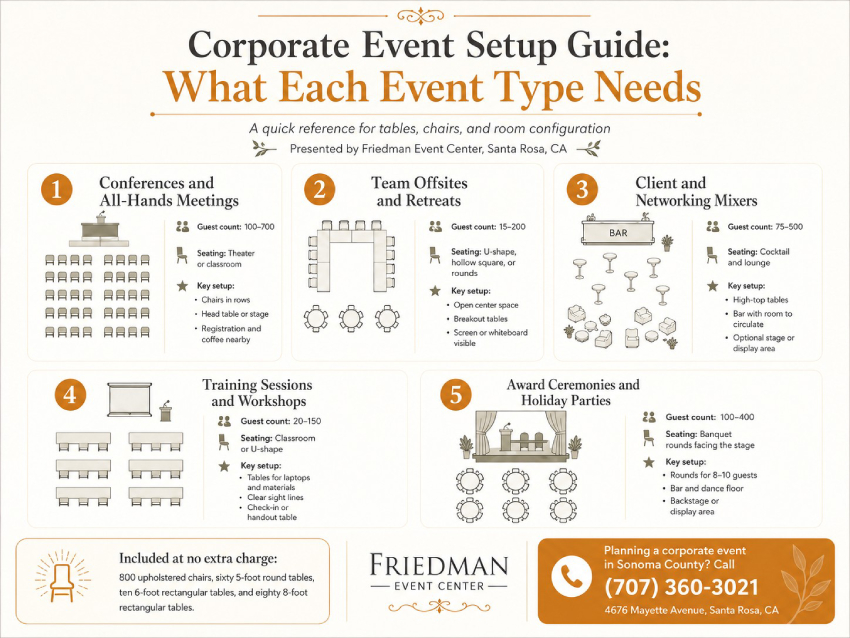
The 5 Main Corporate Event Types and What to Plan For
1. Conferences and All-Hands Meetings
These are full-day gatherings with a set agenda. Speakers, sessions, breaks, sometimes breakouts. Attendee counts range from 100 people at a member conference to 1,000 for a larger industry event.
What to plan for:
- Theater-style seating or classroom layout depending on session type
- Reliable AV: stage, podium, microphone, projection screen, sound
- A separate space for breakouts, meals, or vendor tables
- Coffee and refreshments throughout the day
- On-site parking with a 30-minute arrival window in mind
- A clear plan for room resets between morning keynote and afternoon breakouts
Conferences live or die on flow. The more the venue can section into distinct zones, the easier it is to run multiple program moments in one day.
2. Team Offsites and Retreats
Offsites take the team out of the office to reset priorities, plan the next quarter, or build stronger working relationships. They range from 15 people in a conference room to 200 people across breakout areas.
What to plan for:
- A main meeting space with room to move around, not just sit
- Breakout rooms or zones for small-group work
- Access to outdoor space for breaks, walks, or informal conversations
- Catering that can handle a full day, not just lunch
- Flexibility to rearrange furniture as the agenda changes
Wine Country works well for offsites because the setting itself signals a shift from the day-to-day. Teams that travel in from the Bay Area, Sacramento, or out of state get the added benefit of a memorable location.
3. Client and Networking Mixers
Mixers, receptions, product launches, and appreciation events. The point is conversation, not presentation. Guest counts often run from 75 to 500.
What to plan for:
- A large open space with room to circulate
- A bar area, ideally without a corkage fee if you are bringing your own wine or spirits
- Cocktail tables and lounge seating instead of rows of chairs
- Good acoustics so people can actually hear each other
- Optional stage for brief welcomes or short program moments
The best mixers feel effortless to attend, which almost always means the venue was set up with flow and conversation in mind from the start.
4. Training Sessions and Workshops
Trainings need focus. That means clear sight lines, working AV, tables for materials, and enough room to break into small groups without moving to a different building.
What to plan for:
- Classroom-style or U-shape seating for 20 to 150 attendees
- A screen and projector for slides, video, or shared documents
- Reliable Wi-Fi if the training uses digital tools
- Table space for materials, laptops, and workbooks
- Nearby coffee and lunch so the day does not lose momentum
- A quiet room or corner for private conversations, calls, or exams
Sessions that run 6 or 8 hours require different logistics than a 90-minute lunch and learn. Ask the venue how the space works for the length of your program.
5. Award Ceremonies and Holiday Parties
Recognition events and end-of-year parties combine presentation, dining, and often dancing. Guest counts run 100 to 500. The evening usually splits into 3 parts: reception, program, and social.
What to plan for:
- A stage with podium, microphone, and screen for the awards portion
- Round tables for dining, arranged around a clear sight line to the stage
- A dance floor for after the program
- Bar service and full kitchen access for a plated or buffet dinner
- Backstage or dressing room space for presenters and honorees
- Display cases or tables for trophies, sponsor materials, or silent auction items
The timing on these events is tight. A room that can transition from cocktail reception to seated dinner to open dance floor without losing 20 minutes of program time is worth a lot.
What to Look for in a Corporate Venue
Once you know your event type, use this checklist when comparing options.
Capacity and Layout Flexibility
- Does the space match your guest count with room to breathe?
- Can it be sectioned for different program moments?
- Can it hold theater seating, banquet rounds, classroom, and general assembly setups?
AV and Stage
- Is there a real stage or a raised platform?
- Are podium, microphone, and projection screen included?
- Is the stage wheelchair accessible?
Kitchen and Catering
- Is there a full commercial kitchen or a warming kitchen only?
- Are outside caterers allowed?
- Is there a corkage fee, or can you bring your own wine?
Bar and Beverages
- Is there a built-in bar area with an ice machine?
- What are the alcohol service rules?
Parking and Access
- How many on-site parking spaces?
- Is the venue easy to find for out-of-town guests?
- Is the space wheelchair accessible throughout?
Outdoor Space
- Is there a patio or courtyard for breaks, receptions, or overflow?
- Is the outdoor area weather-appropriate for your date?
What is Included vs. Rented
- Are tables and chairs included?
- Are linens, place settings, and decor included, or separate?
- Are display cases or staging pieces available?
Support
- Who runs day-of coordination?
- How responsive is the venue team during planning?
- Do they have experience with your specific event type?
Not every venue will check every box, but the ones worth booking will answer these questions directly and in detail. Vague answers early in the conversation usually mean surprises later.
How to Structure Your Event Day Around the Space
The venue layout should drive your agenda, not the other way around. A few timing decisions early in the planning process save real headaches on event day.
Arrival and Program Flow
Keep guests out of the main room while AV is still being tested.
- Use a lobby, patio, or separate entrance for check-in and coffee
- Build 30 to 45 minutes of arrival buffer before the program starts
Room Resets and Transitions
Each shift from one seating style to another takes time. Build it into the agenda so it does not disrupt the program.
- Row-to-rounds resets usually run 15 to 20 minutes
- Confirm how many venue staff will be on the floor during transitions
Meal Service Timing
Meal service takes longer than most agendas allow for. Match the format to the room and the time you have.
- Buffet service for 200 people runs 25 to 35 minutes
- Plated service is faster but needs more table space and kitchen coordination
- Schedule meals when the room is already set for dining, not mid-program
Using Outdoor Space Strategically
A patio or courtyard is useful for more than fresh air.
- Move cocktail receptions or afternoon breaks outside so the venue team can reset the main room
- Confirm outdoor capacity and any weather backup plans in advance
Sound Check and AV walk-through
Doing sound check during the first 10 minutes of the program is the fastest way to lose an audience.
- Ask for 30 minutes with your presenter and the AV setup before doors open
- Confirm microphone levels, slide formatting, and lighting
Confirm who is coordinating with your team during the event. A clear point of contact on the venue side keeps small issues from becoming large disruptions.
What to Have Ready Before Your First Venue Call
You are ready to reach out to a venue when you can answer these:
- Guest count (a rough range is fine)
- Event date, or 2 to 3 preferred dates
- Type of event and general agenda
- Whether you need indoor, outdoor, or both
- Catering direction (in-house, outside caterer, buffet, plated)
- Any AV needs beyond a screen and microphone
If any of those are still open, that is normal. A good venue team will help you think through the rest during a site visit or planning call.
What a Top Corporate Venue Should Include
The best fit for most corporate event needs is a facility with real capacity range, included furniture and AV, indoor and outdoor space, and a team that has actually run events like yours.
Friedman Event Center in Santa Rosa is one venue built for exactly this kind of use. The facility has hosted corporate conferences, offsites, networking events, training sessions, award ceremonies, and business meetings for more than 30 years.
What Sets Friedman Event Center Apart for Corporate Events:
- 6,500 sq. ft. ballroom that seats 500 with a dance floor, 800 theater style, and up to 1,000 in general assembly
- 31′ x 26′ stage with a 16′ x 12′ drop-down screen, speaker podium, microphone, and backstage dressing rooms
- Fully equipped commercial kitchen for outside caterers, plus wet bar and ice machine at no extra charge
- No corkage fee
- 2,100 sq. ft. outdoor patio with a fountain, useful for receptions, breaks, or breakout space
- 800 upholstered chairs and a full inventory of round and rectangular tables included
- Brand-new conference room with a conference table and large-screen monitor for smaller meetings
- Ample on-site parking
- Central Santa Rosa location, close to hotels and easily accessible from the highway
The Friedman team works directly with corporate planners on layout, timing, and vendor coordination.
Sonoma County as a Corporate Event Destination
Sonoma County sits about an hour north of San Francisco, a 90-minute drive from Oakland, and roughly 2 hours from Sacramento. That geography pulls in guests from across Northern California without an overnight requirement for most attendees.
The Wine Country setting also gives an event weight. A conference in Santa Rosa reads differently than the same conference at an airport hotel. That matters for client events, board retreats, and any gathering where the location signals importance.
Local vendor networks are strong. Caterers, florists, AV providers, transportation, and lodging partners all know how to work with venues in the area, which streamlines that planning timeline.
Santa Rosa provides a strong central location for corporate events, with nearby hotel options within 5 to 10 minutes of most venues and event spaces that accommodate groups ranging from 80-person board meetings to 1,000-person award ceremonies.
Ready to Plan Your Next Corporate Event?
If you are comparing options for a corporate event venue in Sonoma County, Friedman Event Center is worth a visit. Contact us online or call (707) 360-3021 to check availability, ask questions, or schedule a walk-through.
Our team can help you match your event to the right space, whether that is a 30-person board meeting or a 500-guest conference.
Frequently Asked Questions
What is a corporate event venue, and what should it include?
A corporate event venue is a dedicated event space set up to host business gatherings, from meetings and trainings to conferences and award ceremonies. At a minimum, it should include enough capacity for your headcount, working AV, catering-ready kitchen or open catering policy, tables and chairs, on-site parking, and a team that helps coordinate the event day.
How far in advance should you book a corporate event venue in Sonoma County?
Plan on 3 to 9 months for most corporate events, and 9 to 12 months for peak dates in spring, fall, and December. Smaller meetings for 20 to 50 people can sometimes be booked 4 to 8 weeks out if the venue has open dates.
Can you bring your own caterer and alcohol?
At many Sonoma County event centers, yes. Friedman Event Center, for example, has a full commercial kitchen for outside caterers and does not charge a corkage fee. Confirm alcohol service rules and any required insurance with the venue before you sign.
Do corporate events need a stage and AV?
Most do. Conferences, trainings, award ceremonies, and product launches almost always need a screen, microphone, and podium at minimum. Networking events and casual mixers can often skip the stage but still benefit from good sound for welcome remarks.
What size venue do you need for a corporate event?
Match capacity to your event type. A 30-person board meeting needs a conference room. A 200-person training runs well in a sectioned ballroom. A 500-guest gala or 700-person conference needs a large ballroom with theater or general assembly seating and a real stage.